
After Us: One Family's Impossible Question
A small nonprofit from Southampton carried that question to the state Capitol—and found that the answer, for too many families, is still silence.
Every parent of a child on the autism spectrum eventually arrives at the same question, usually late at night, usually alone. It is a question that combines the deepest love with the deepest dread, and it has no clean answer: What happens to my child when I am gone?
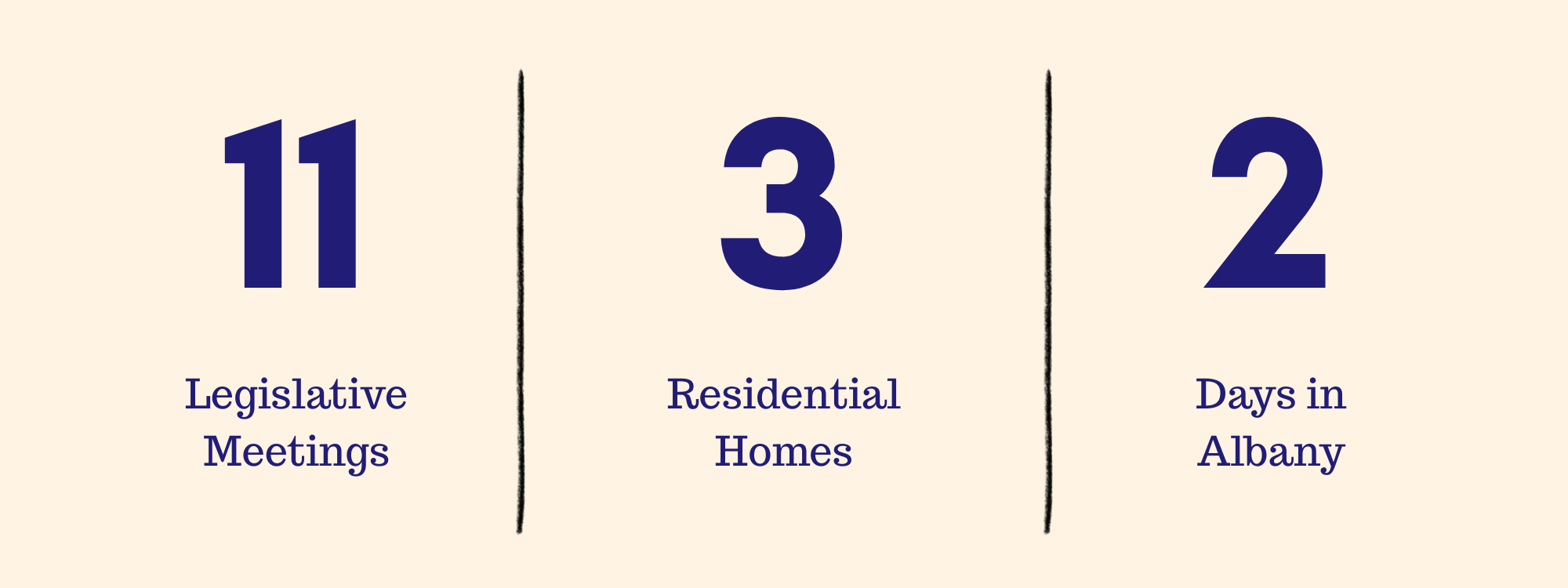
This week, a delegation of parents, advocates, and caregivers from Luv Michael Inc.—a Southampton-based nonprofit operating three residential homes for adults on the autism spectrum—brought that question with them to Albany, where they joined hundreds of families at the state’s annual Autism Action Day. Over two days, the group held eleven meetings with legislators and their staffs, sat down for dinner with Assemblyman Angelo Santabarbara, and stood at the center of a conference hall making the case for a bill that, to many of those present, felt less like policy than personal survival.
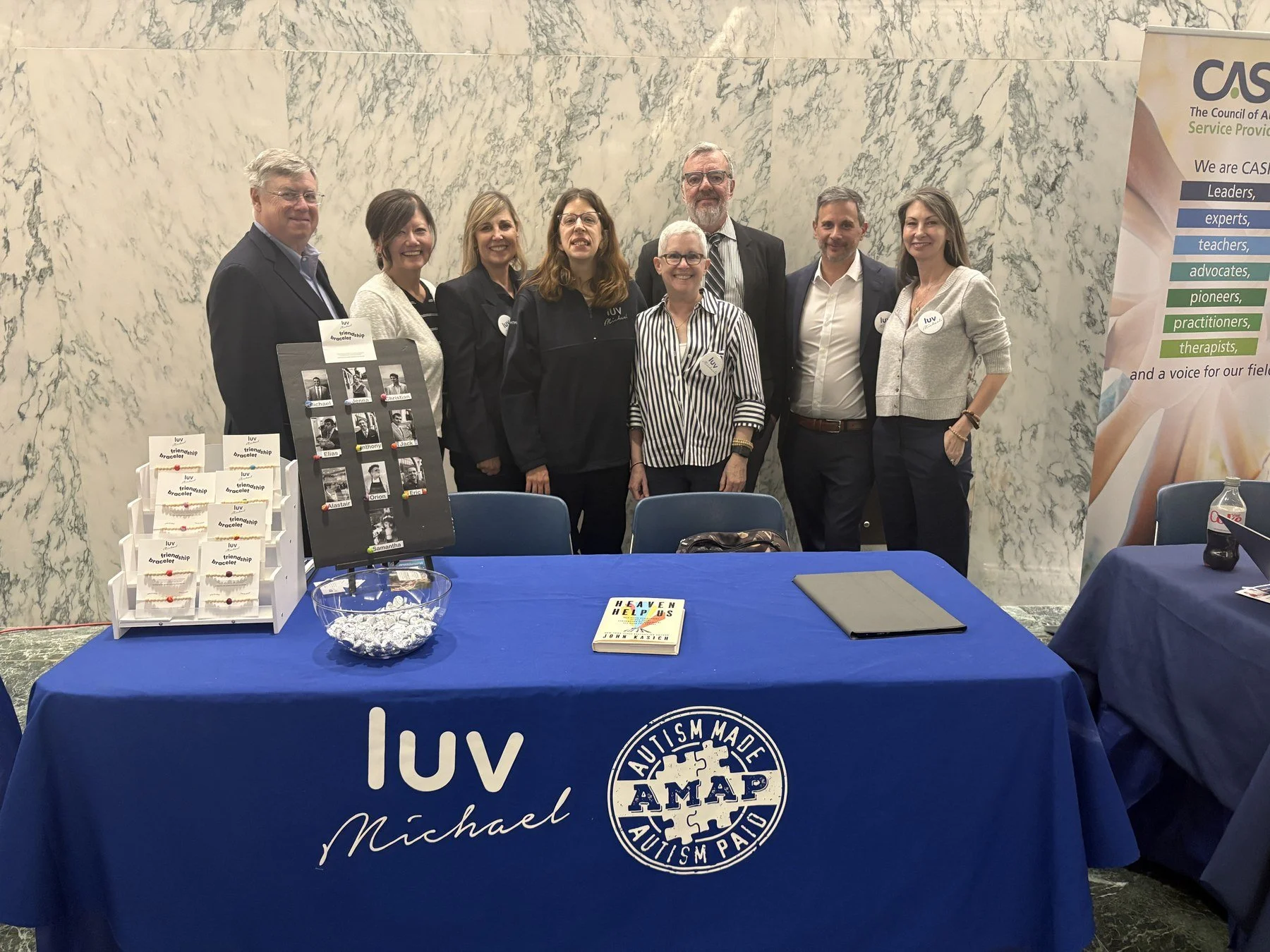
Autism Action Day, Albany, April 2026. Left to right: Will Powers, Jeanette Powers, Dr. Lisa Liberatore, Jenna Carballo, Jeff Damon, Heather Damon, Mark Biondi, and Kim Biondi at the Luv Michael table in the Capitol rotunda.
“The need is great,” said Dr. Lisa Liberatore, founder of Luv Michael, after the second day of meetings. “And parents are leading the charge and innovating—because, honestly, there really are no other options.”
A Model Born of Necessity
Luv Michael was founded in 2015 by Dr. Liberatore and Dr. Dimitri Kessaris. What began as a question—the question—has grown into three residential homes in Southampton, a workforce development program, and a community enrichment initiative called Indigo Life. The organization now serves a growing population of adults who have aged out of the school system and into a largely unprepared adulthood.
The delegation that traveled to Albany included Dr. Liberatore; Executive Director Mark Biondi and his wife Kim; parents William and Jeanette Powers and Jeff and Heather Damon; and advocate Jenna Carballo. They carried with them a specific legislative goal: building support for Alternative Housing Bill 9194, which would establish a pathway for community-based, family-driven residential models like Luv Michael’s to receive state recognition and funding.
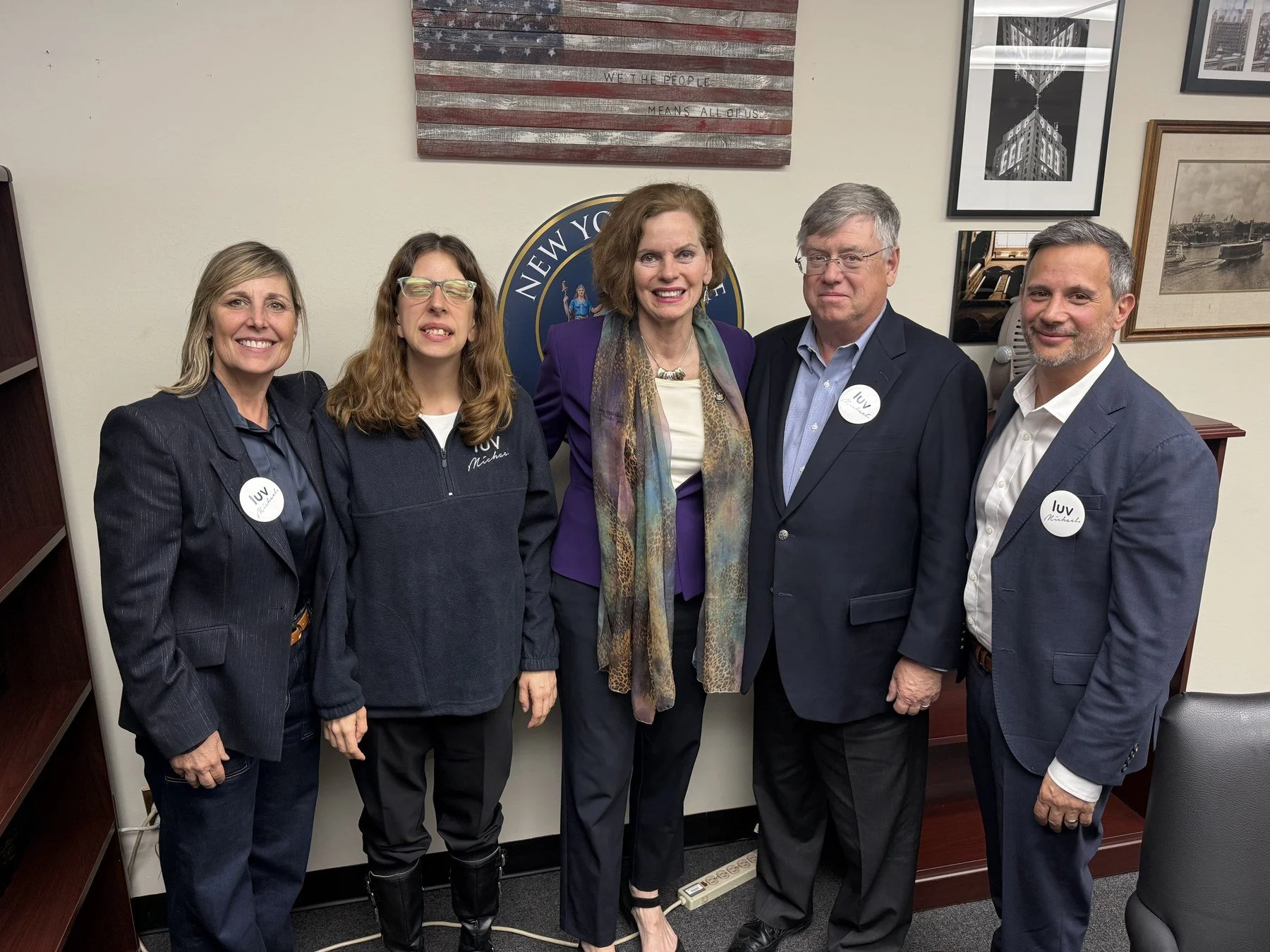
Meeting with Senator Patricia Fahy. Left to right: Dr. Lisa Liberatore, Jenna Carballo, Senator Fahy, Will Powers, and Mark Biondi.
By the end of the two days, the team had secured new co-sponsors and expressions of support from multiple legislative offices, including those of Senator Kavanaugh and Assemblyman Hevesi. The chief of staff at Senator Palumbo’s office received an invitation to visit the Southampton homes in person.
Sarah Beaver, of Assemblyman Hevesi’s office, proved particularly helpful in explaining the political terrain—the informal alliances and institutional inertia that shape which bills advance and which quietly disappear.
“Not Just Theory”
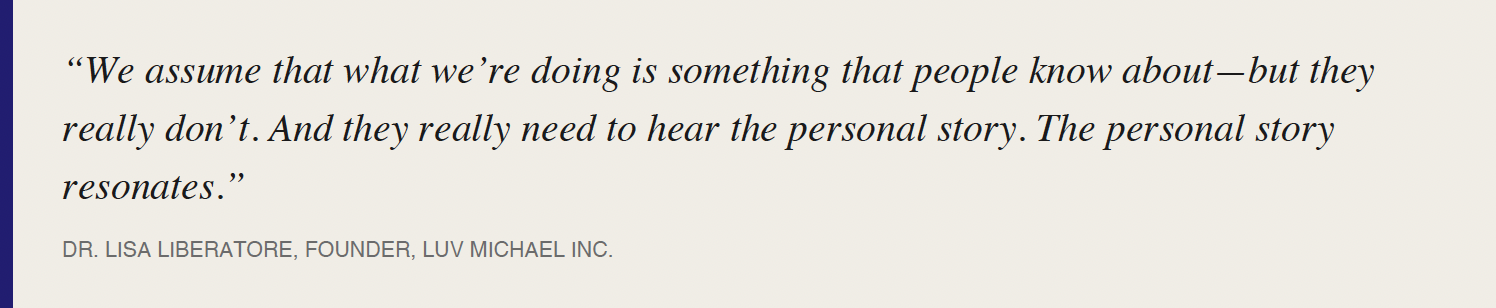
What distinguished Luv Michael’s presence in Albany was the texture of what they were describing. Most of the voices in that building speak about disability policy in the language of budgets, regulatory frameworks, and population statistics. The Luv Michael delegation spoke in the language of specific rooms, specific residents, specific mornings.
“They’re hearing things that are happening around the state,” Mark Biondi said, “but they’re mostly people who are doing things in theory, not in practice.” Luv Michael, he added, is doing it. The homes are running. The residents are living full lives. The model exists—and it can be seen.
That offer to be seen—to invite legislators to Southampton, to show rather than simply tell—emerged as the delegation’s most consistent and deliberate message. “Our mission was really about inviting legislators to come and see our model in Southampton, and letting them know that we’re a resource to them,” Biondi said.
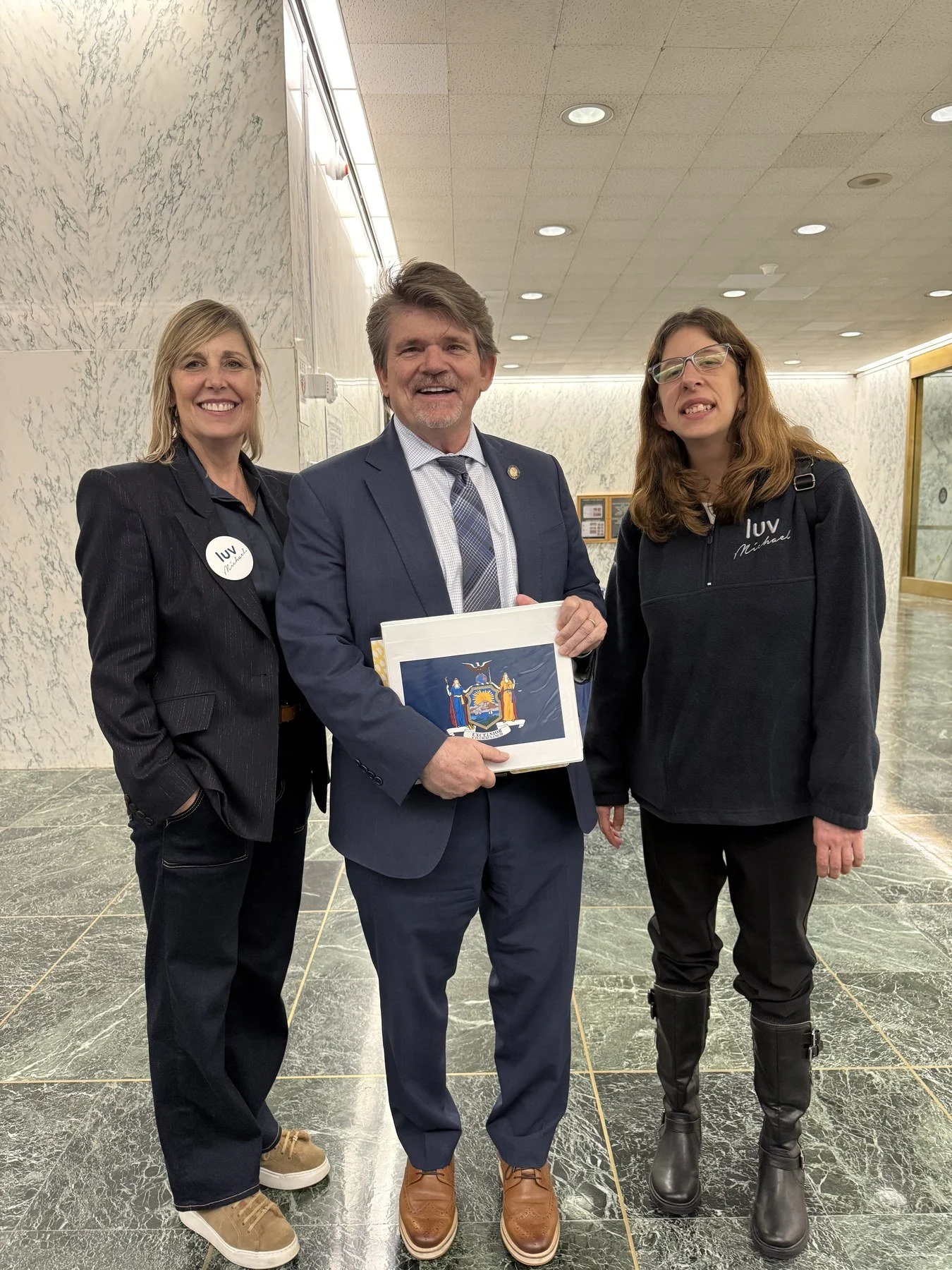
Left to right: Dr. Lisa Liberatore, Assemblyman Tommy John Schiavoni, and Jenna Carballo in the Capitol.

The Question That Drives Everything
Among the parents in the delegation, the weight of the trip was something more intimate than legislative strategy. William and Jeanette Powers, and Jeff and Heather Damon, are not lobbyists. They are parents who found an organization that gave shape to their answer to the question—and traveled to Albany to make sure others could find it too.
Dr. Liberatore, reflecting on the two days, pointed to something she had noticed in every meeting: the moment a legislator or staffer stopped taking notes and just listened. “Anybody who is a parent, or cares about somebody with a disability, understands that you’re just trying to take care of your loved one the best way you can,” she said. “That resonates with everyone.”
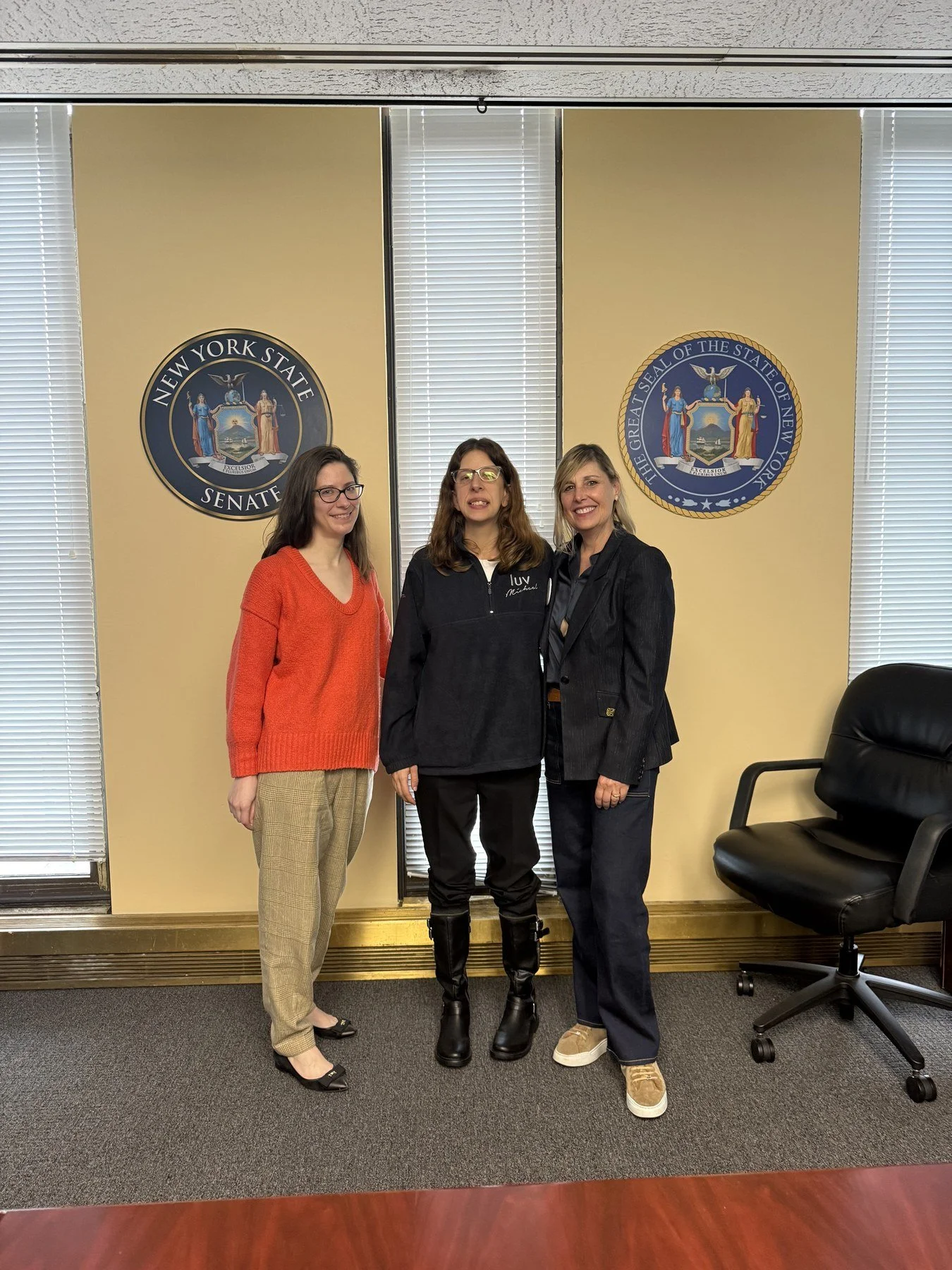
Left to right: Anna Sargeant, Jenna Carballo, and Dr. Lisa Liberatore in a New York State Senate office.
The Luv Michael team is now focused on two near-term priorities: establishing itself as an official pilot model for alternative residential housing in New York State, and securing a line in the Governor’s budget that would recognize and support that model. Neither is guaranteed. Both feel, to the people involved, absolutely necessary.
They have a third annual Luv Michael Housing Conference coming up. A fifth annual Surfers Healing event planned for the summer. Three homes running in Southampton, filled with adults whose families once had no answer to the question.
They are the answer. They are trying to make it possible for more families to find it.


Late Tuesday afternoon, before the delegation boarded the bus back to Southampton, Dr. Liberatore was asked what she would remember most from the trip. She thought for a moment. “That you really do have to make the effort to show up in person,” she said, “if you want to make an impact.”
Eleven meetings. Two days. One question that every parent eventually asks.
They showed up.
